The Ultimate Guide to Green Sea Turtles: Swimming with Giants

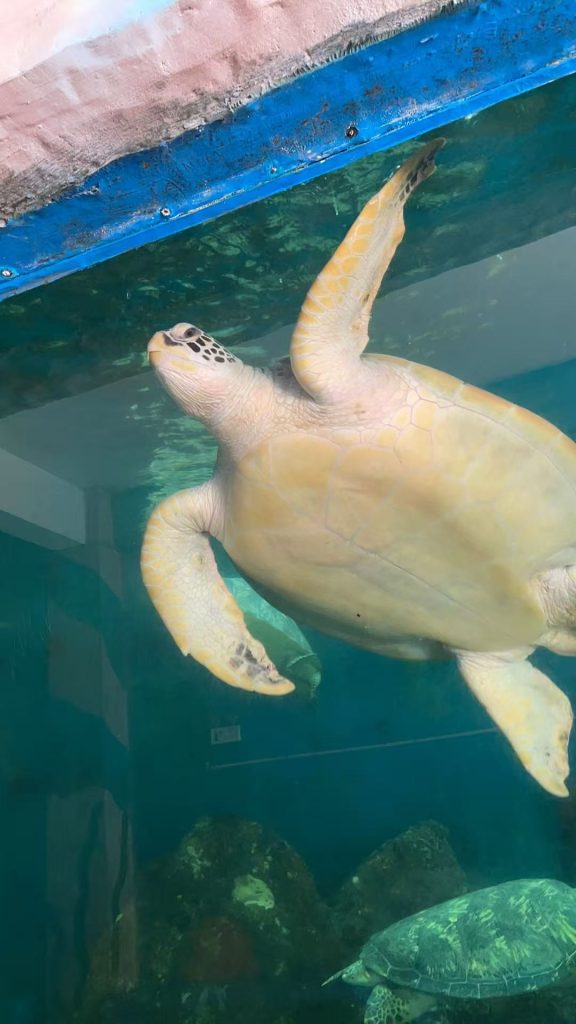
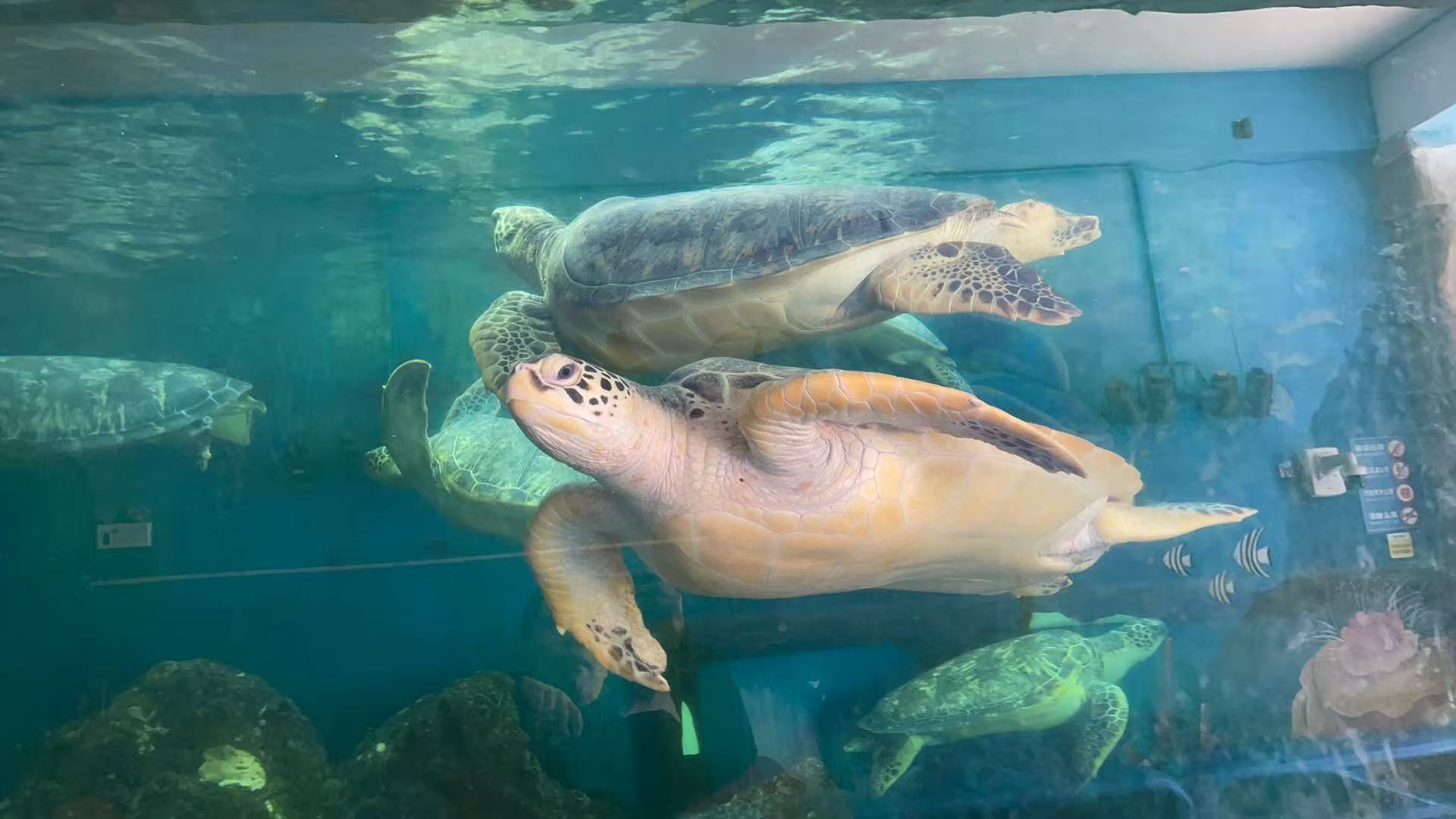
So here’s the thing about green sea turtles (also called Chelonia mydas, or Tortue verte) – once you’ve floated next to one, you’re kind of ruined for other wildlife encounters. They’re massive, calm, and could not care less that you’re there.
Fun fact that trips everyone up: they’re not actually green. Not on the outside, anyway. The shell is more of an olive-brown. The “green” part? That’s their body fat. Turns out when you eat nothing but seagrass and algae your whole adult life, your fat literally turns green. Weird and kind of amazing.
How Much do You Know About the Green Sea Turtle(Tortue Verte)?
How big are we talking?
Bigger than most people expect. An adult tortue verte’s shell runs about 100–120 cm long, and they weigh anywhere from 150 to 400 kg – some clock in well over 500 pounds. They’re built for distance, too. That teardrop shell and those big paddle flippers let them cross entire oceans between where they eat and where they nest. When they’re young, the shells have these cool radiating streaks on each scute. Adults lose that pattern and go darker, which makes them harder to spot against the reef. Handy if you’re a turtle. Annoying if you’re a snorkeller.
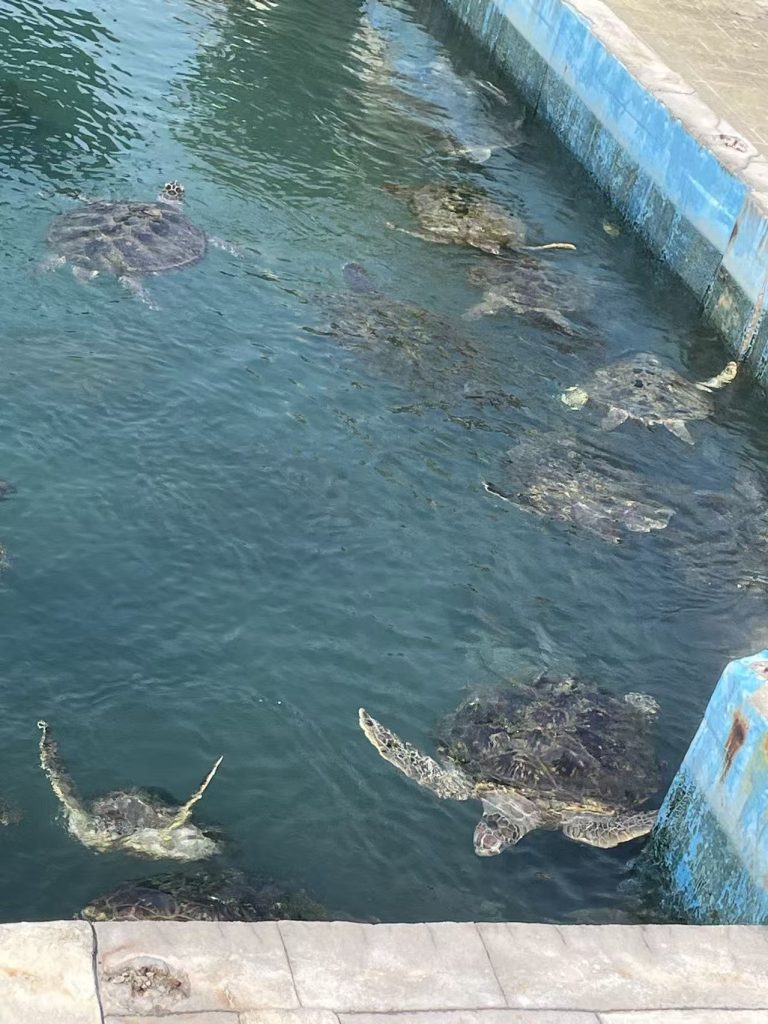
What does green sea turtle eat?
Every other sea turtle eats meat. Greens don’t. Well, they do when they’re young—jellyfish, tiny invertebrates, the usual. But adults? Pure vegetarian. Seagrass and algae only.
Why should you care? Because that grazing is actually keeping entire ecosystems running. Turtles mow the seagrass down. It grows back thicker. Fish use those beds to breed and raise fry. No turtles, no mowing, seagrass chokes itself out, fish lose their nursery. It’s all connected.

Green sea turtle babies
Females don’t breed until they’re somewhere between 25 and 35. Years. Not months.
When she’s ready, she swims back to the beach where she was born. Could be thousands of kilometres away. She drags herself onshore after dark, scoops out a hole with her back flippers, drops a hundred-odd eggs in there, covers them up, and leaves. Never comes back.
The eggs sit for about two months. Then a bunch of tiny turtles scratch their way out of the sand and run for the ocean. Birds grab some. Crabs grab some. The ones that make it to the water mostly disappear into the open ocean for years before anyone sees them again.

Double-Moon Bay, China: The Last Nesting Stronghold
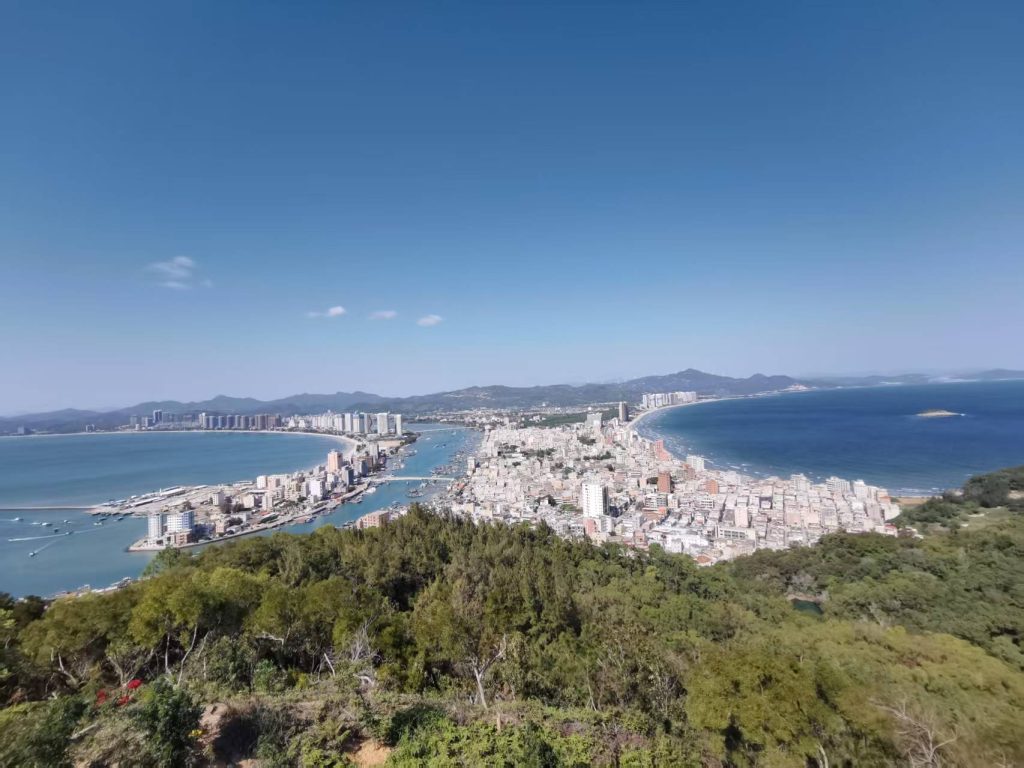
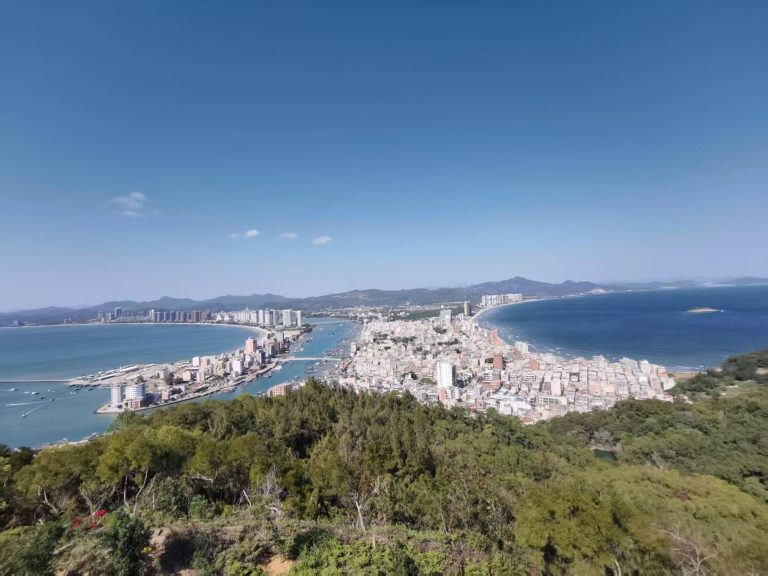
Huidong County, Guangdong Province. Not a place most travellers have heard of. But there’s a bay here—Shuangyue Bay, locals call it Double-Moon Bay—that carries a weight way out of proportion to its size. From the air, the coastline bends into two crescents side by side. Looks like a pair of moons, which is where the name comes from.
Here’s what makes it matter, though. Eighteen thousand kilometres of Chinese coastline. And this one bay is the only spot where green sea turtles still crawl ashore to lay eggs. The only one. Every other nesting beach they once used is gone—developed, polluted, lit up, paved over. Shuangyue Bay is what’s left.
A History of Decline and Renewal
Back in the 1950s and 60s, somewhere between 400 and 500 green turtles showed up at Double-Moon Bay every year to nest. That was normal. Then came the poaching. The construction along the coast. Water quality tanked. By 1985 the count had dropped to about 100, and that scared enough people into doing something about it. China opened the National Sea Turtle Conservation Center right there in Huidong that same year.
Fast forward to now and the numbers are still grim. Some seasons only a handful of females drag themselves up the beach. Lights from nearby development confuse them. Fishing nets catch them. The habitat keeps shrinking. But something happened in 2017 that nobody had pulled off before in China—staff at the centre got captive-bred adult females to actually nest and produce viable eggs through artificial methods. More than 740 baby turtles came out of that effort alone. And since the centre first opened its doors, they’ve put over 65,000 turtles back in the ocean. Not enough to celebrate yet. But not nothing either.
Visit Double-Moon Bay
Gorgeous on both sides. Just don’t expect the same beach twice. One half could pass for a lake. The other half will knock you sideways if the swell’s up.
The nature reserve there—Huidong Sea Turtle National Nature Reserve, known locally as Turtle Bay and officially a Ramsar Wetland of International Importance—has this boardwalk. Two kilometres long, hugs the coastline. Honestly the views alone are worth the trip even if you never see a turtle.
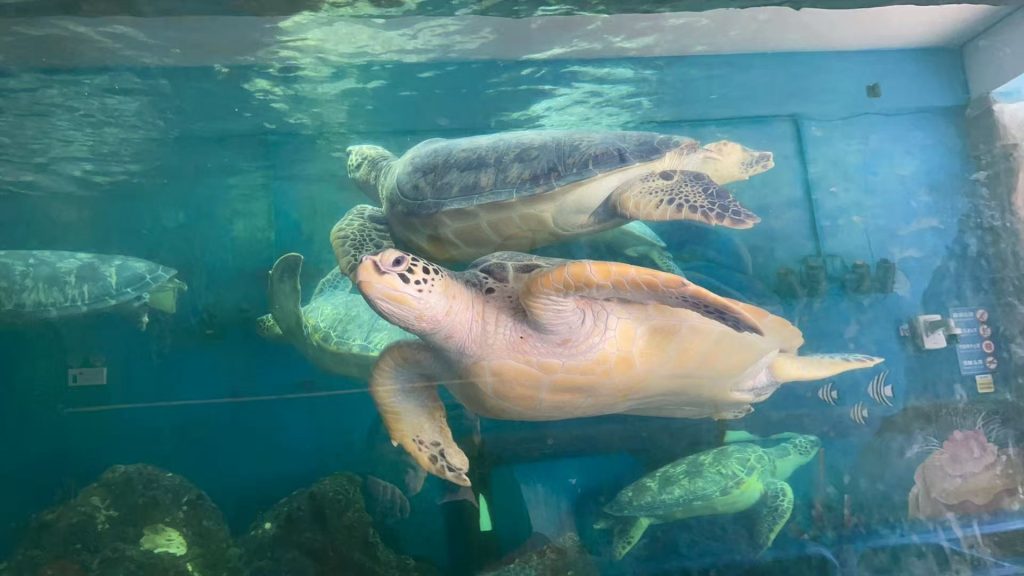
Gangkou is the nearest town. Fishing village, basically. The seafood is fresh and cheap and the homestays are family-run and no-frills. Think plastic chairs on a terrace overlooking the harbour. Perfect if that’s your speed.
Turtles nest between June and September. The actual nesting beach? Fenced off. Can’t go there. Fair enough. The boardwalk passes close, though, and the visitor centre inside the reserve does a solid job walking you through the science and the stakes. Want to get your hands dirty? A few conservation organisations coordinate volunteer stints through the reserve. Worth looking into if you’ve got time to spare.
Getting there: High-speed train, Shenzhen to Huizhou. Thirty minutes, give or take. Then drive 50 minutes to Huidong. Or skip the train and drive from Guangzhou—about two hours door to door.
Cancún and the Riviera Maya
If Double-Moon Bay represents the green sea turtle’s tenuous hold in East Asia, then Mexico’s Caribbean coast represents one of its great success stories. The stretch from Cancún down through the Riviera Maya has become one of the best places on earth to swim with tortue verte (green turtles), and the locals figured out something smart—make the tourism pay for the conservation. It works. Genuinely works.
Akumal
The name is Mayan. Means “place of turtles.” Not exactly subtle. It’s a small beach town about 120 kilometres south of Cancún and the bay there is wall-to-wall seagrass. Which, if you’ve been paying attention, means turtles.
Walk into the water at Akumal. Waist deep. Mask on. And there they are, right in front of you, munching away on the grass like nothing else exists. Greens, mostly. Loggerheads and hawksbills turn up too but the greens own that bay.
Isla Mujeres
Quick ferry from Cancún. The island has been a turtle nesting ground for a long time—multiple endangered species use it—and the southern tip fills up with greens during mating season, May through July. There’s a place called the Tortugranja. Turtle farm, basically. Small operation. They’ve got turtles at every stage from just-hatched to fully grown. Doesn’t cost much to get in and the money goes straight back into keeping the programme running.
Nesting season and hatchling releases
May to November the beaches go crazy with nesting. And here’s something that surprised me about the hotels along this coast—a lot of them actually do conservation work. Not just lip service. Staff go out with marine biologists after dark, find fresh nests, dig the eggs up and move them into guarded nurseries where crabs and poachers can’t get at them.
Then 45 to 60 days later the eggs crack open. The resort invites guests down to the beach. Somebody opens the nursery pen. And you watch a hundred tiny turtles lose their minds trying to reach the water. Stumbling over each other, flippers going everywhere, waves knocking them back. Some people cry. Nobody talks for a while after.
Green Sea Turtle vs. Eastern Pacific Green Turtle: What’s the Difference?
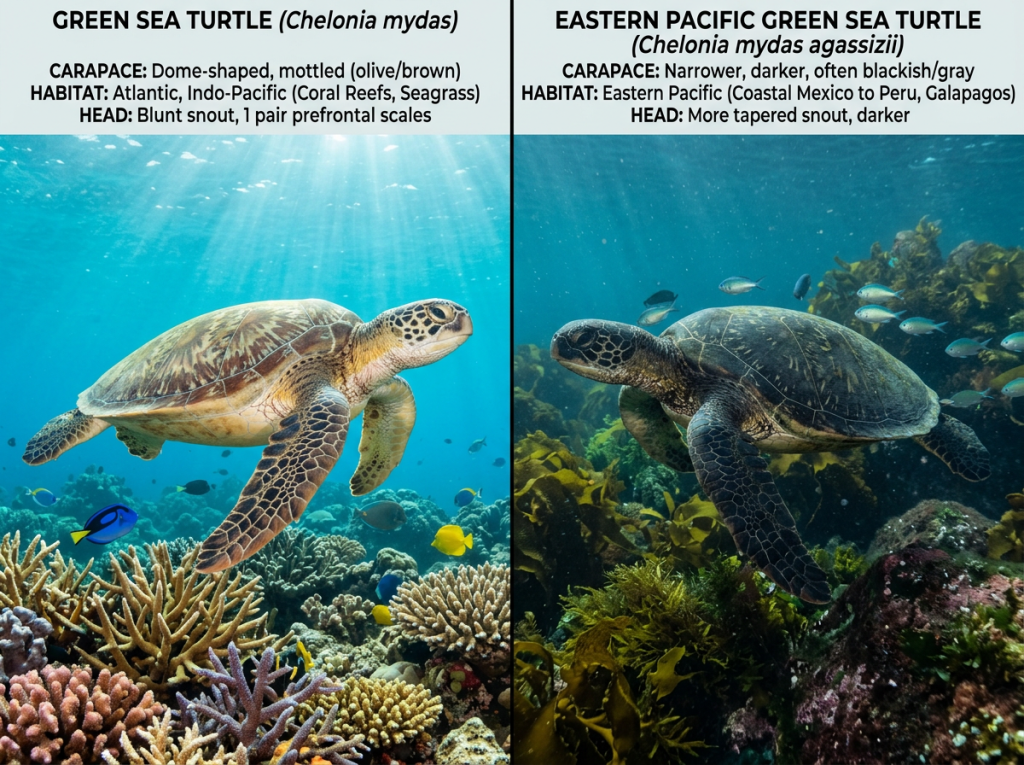
Read enough about green sea turtles and eventually you’ll run into mentions of something called the Eastern Pacific green turtle. Or the black sea turtle. Or Chelonia mydas agassizii. On Mexico’s Pacific coast people just say tortuga negra. Whether it’s actually a separate species from the regular green turtle—nobody can agree. Scientists have been arguing about it for decades and they’re still going.
They look different. Obviously.
Put them side by side and you’d notice immediately. The standard green turtle has that olive-brown shell, yellowish underneath. The Eastern Pacific version? Dark. Really dark. The shell gets close to black sometimes, and the skin runs much deeper in pigment too. That’s where “black turtle” comes from. Shell shape is a bit different as well—the Eastern Pacific ones are narrower, more of a teardrop. Regular greens are rounder, wider across.
Smaller, too
Not by a huge margin but enough to measure. Eastern Pacific adults get to about 1.2 metres and top out around 130 kg. Atlantic greens blow past 150 kg regularly. Some hit 200-plus. Heads are proportionally smaller on the Eastern Pacific form. Nobody’s totally sure why.
Where do they live?
Regular green turtles are everywhere—tropics and subtropics globally, split into two big genetic groups, Atlantic and Indo-Pacific. The Eastern Pacific form has a much tighter range. Baja California down to Chile, hugging the coast. Big nesting sites in Michoacán and the Galápagos. Actually, they’re the only sea turtle that nests in the Galápagos at all. And here’s a weird one: they sunbathe. Haul themselves out of the water and just sit there baking. Documented in Hawaii too. Most other green turtle populations don’t do that.
Same diet, same nesting routine. Mostly.
Adults eat seagrass and algae. Both types start as omnivores when young, then make the switch. Females from both groups go back to their birth beaches to lay eggs at night. Standard turtle behaviour. One difference though—the Eastern Pacific form lays fewer eggs per nest. Not dramatically fewer, but consistently fewer.
Why does any of this matter?
Because classification has consequences. Run the DNA and the two forms come back almost identical. Close enough that most scientists lump them together as one species, Chelonia mydas. But the physical differences aren’t random variation—they’re consistent across populations and generations. Some researchers want subspecies status. C. mydas agassizii. Others push harder and say no, give it full species recognition.
The stakes aren’t abstract. A separate species designation would almost certainly trigger stronger legal protections. And these turtles need them. Egg harvesting along Central America’s Pacific coast has hammered their numbers. Hunting too. Calling them the same species as the billions of greens elsewhere makes it easier to deprioritise them. Calling them their own thing forces a different conversation entirely.
Travel Tips for Green Sea Turtle Encounters
Doesn’t matter if you’re at Double-Moon Bay, Akumal, the Galápagos, wherever. Same rules apply anywhere turtles are.
- Five metres. Minimum. Between you and the turtle at all times. Do not touch them. Do not try to ride them. Yes, people have tried. Do not chase them.
- Come at them from the side, never straight on. Head-on approach looks like a predator to them. From the side they can clock you with one eye and decide for themselves whether to stick around or bolt.
- Turn your flash off. Seriously. During nesting season especially—artificial light screws up the females trying to find their way back to the water and confuses hatchlings so badly they crawl in the wrong direction. Some of them head toward the road instead of the ocean. It kills them.
- And get a proper guide. Licensed. Someone who knows the animals and the area and isn’t just trying to get you the best Instagram shot.